Platform

§00 · Anchor

Follow one task from intent to replay.

CertainTIQ is built around a shared foundation. It carries task meaning, state, rules and history through an agent workflow, so the work and its record are one object.

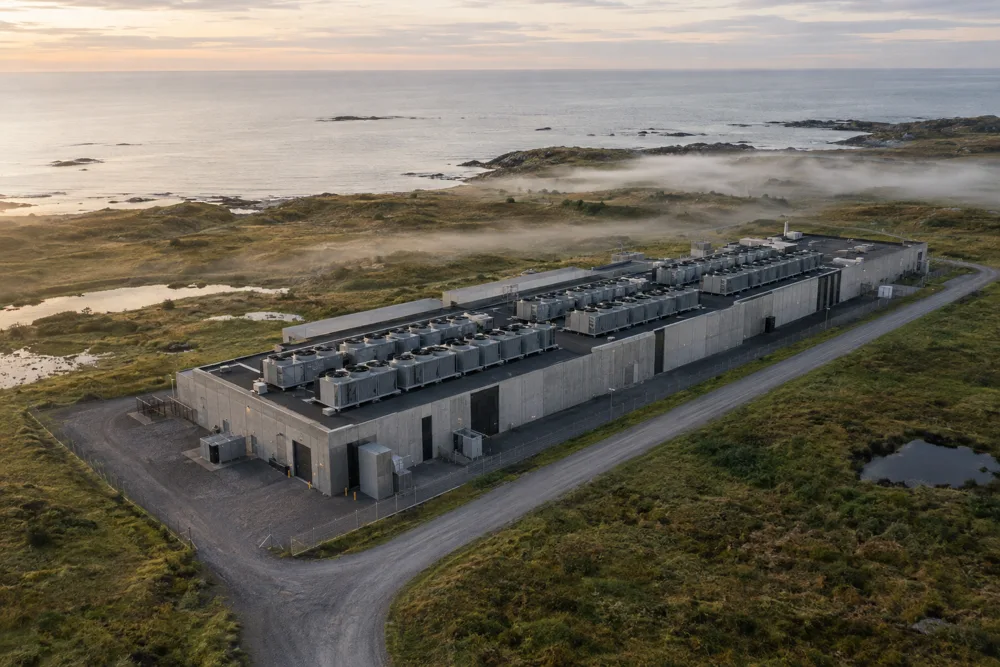
Drone view of a long, low data facility with rows of rooftop cooling units on a coastal plain, fog drifting over the grassland and the sea beyond.
Illustrative photograph. Boundaries set before the work begins.

The life of a task

Anchor

Five stages, in a fixed order.

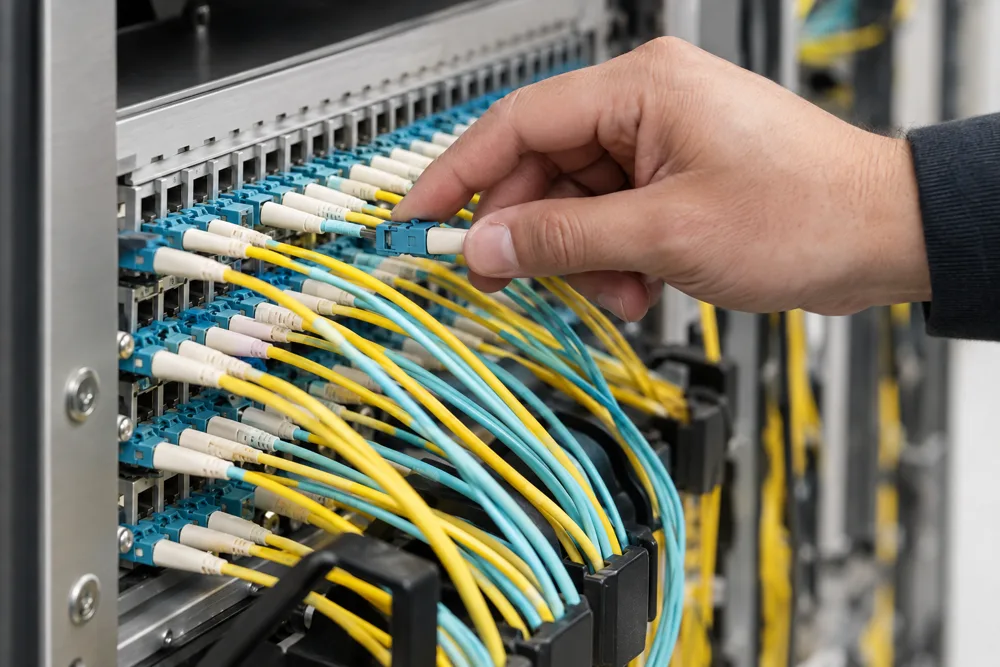
A hand seats a fiber-optic connector into a densely patched panel of yellow and aqua cables.
Illustrative photograph. Many devices, one interface.

Stage 01

Intent becomes a contract.

Before any logic runs, the task is wrapped in five envelopes. Semantic says what it means. Temporal sets logical time and checkpoints. Lineage records what it came from. Policy states what it may do. Execution states how it must run, including replay tolerance. Once validated, they bind the task for its whole life.

E1Semantic
E2Temporal
E3Lineage
E4Policy
E5Execution

Five envelopes bind each operation before dispatch.
Stage 02

Rules run before the hardware does.

Checks run as in-process calls in a fixed order: global, sovereign-domain, tenant, temporal, accelerator eligibility, exceptions. An audit record is written before release. If a rule fails, no execution assignment is created.

Fig. 01 · Choose a rule to fail, then run the task.

Zero-hop describes the kernel boundary: validation, policy, scheduling and audit sit in one process. It does not mean zero physical network or device transfers.

Stage 03

The same lane, every time.

Routing considers task meaning and the published capabilities of eligible hardware. When several devices qualify, a fixed tie-break decides: rule priority, tenant locality, memory-latency class, then lexicographic device ID. Shuffle the arrival order and the assignment does not change.

Fig. 02 · Shuffle the arrival order.

Stage 04

Every step leaves a sealed trace.

Each transformation becomes a node in a directed graph. Its SHA-256 anchor covers the node ID, its sorted parent IDs, its envelope ID, its policy-decision ID and its temporal checkpoint. Alter one record and its anchor no longer matches. Fig. 03 below also chains each anchor to its parents' anchors, so the change shows downstream.

anchor = SHA-256( node_id ‖ sort(parent_ids) ‖ envelope_id ‖ policy_decision_id ‖ temporal_checkpoint )

Anchor recipe: node ID, sorted parent IDs, envelope ID, policy-decision ID, temporal checkpoint.

Stage 05

Replay, then compare.

An isolated replay context reconstructs past state without touching production. It then compares the execution assignment, policy outcomes, event sequence and lineage hashes. Numerical drift on GPUs is judged against a recorded tolerance.

Fig. 03 · Run the record, replay it, then alter one entry.

Hashes give a reference for comparison. They do not by themselves prove that inputs were true, establish independent custody or show that a model was correct. Replay is an evaluation objective within a pinned environment.

Explore the proposed workflow. Follow one request through before dispatch, during execution and on review, and see how the deterministic DB holds its context while the deterministic HPC runs it under policy.

Lineage

Anchor

Each recorded state links to its causes.

The lineage graph is directed. A state points to its causal predecessors, so a reviewer can walk back from a result to the inputs, rules and checkpoint that produced it.

Two product lines, one substrate

Anchor

One foundation, two ways in.

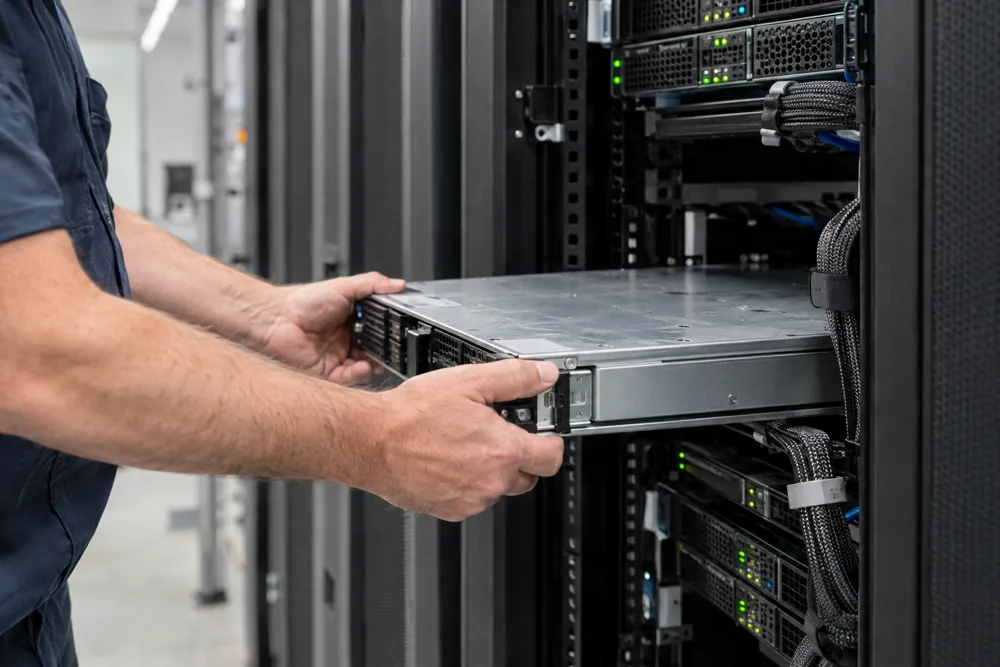
A technician's hands slide a server into an open rack, braided cable bundles along its side and green status lights on the units below.
Illustrative photograph. Heterogeneous hardware, one boundary.

Deterministic HPC

Every cycle, accounted for.

Heterogeneous accelerator orchestration. The design places envelope validation, policy enforcement, deterministic scheduling and audit emission inside one in-process boundary before dispatch. It is intended to run on off-the-shelf hardware, independent of any single interconnect.

Boundary
Validate, enforce, schedule, emit audit.
Devices
CPU, GPU, FPGA and AI accelerator classes.
Status
In development. Supported devices are confirmed per evaluation.

A common runtime interface is intended to hide supported device and transport differences. Drivers, kernels, libraries and integration work remain part of a deployment.

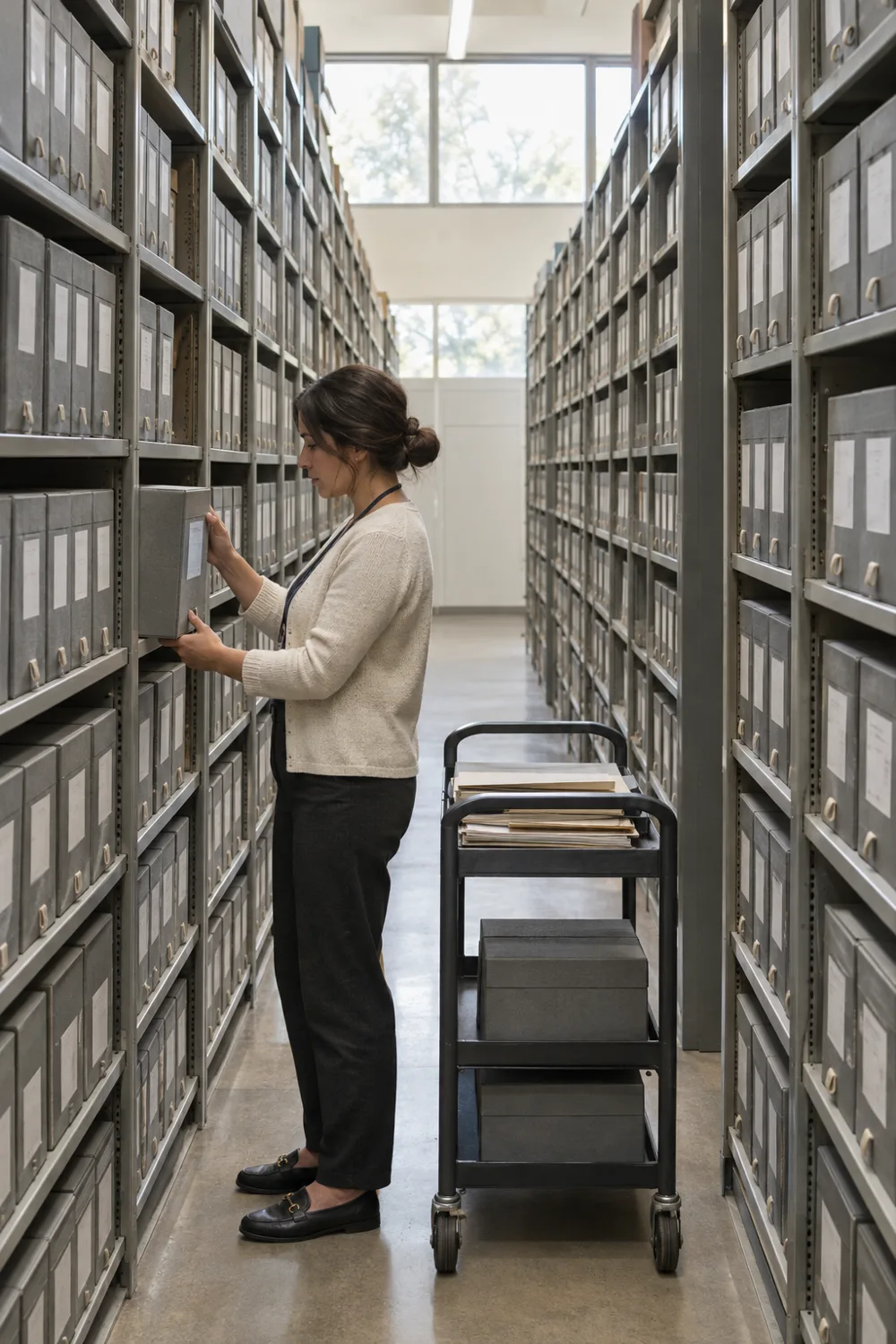
An archivist lifts a grey box from a long aisle of shelving filled with uniform archive boxes, a cart of files beside her and tall windows at the far end.
Illustrative photograph. History kept rather than overwritten.

Deterministic DB

Every record, replayable.

A data substrate that records history instead of overwriting it. Each recorded state links to its causal predecessors in a lineage graph and carries a SHA-256 anchor, so a reconstruction can be compared against the original inside a defined environment. Related data is grouped by meaning to support locality and retrieval.

History
A lineage graph of semantic and temporal deltas.
Anchors
SHA-256 over node, sorted parents, envelope, policy decision and checkpoint.
Status
In development. The replay objective is set per evaluation environment.

Sovereignty descriptor

Anchor

Jurisdiction travels with the work.

A sovereignty descriptor accompanies each operation. Jurisdiction, residency, tenant boundary and authorized resources are checked before dispatch. A denial is not hidden. It becomes part of the record.

  • Jurisdiction and residency are stated as data.
  • Tenant boundary and authorized resources are checked first.
  • Denials are recorded with the rule that produced them.

Hosting boundaries and supported dependencies are confirmed in each evaluation.

Sovereignty descriptorSpecimen · Exhibit 05
Jurisdiction
Stated as data
Residency
Stated as data
Tenant boundary
Checked first
Authorized resources
Checked first
Checked
Before dispatch
On denial
Recorded with the rule that produced it
Denial · recordedAnchor

Utilization arithmetic

Anchor

Do the arithmetic on your own fleet.

In its 2026 study, Cast AI reported average GPU utilization of 5% across the non-optimized Kubernetes clusters it analyzed. Set your own current and target figures. The result is a ratio of capacity in use. It is not a CertainTIQ performance claim.

Source: Cast AI, 2026 State of Kubernetes Optimization Report, April 21, 2026.

Proposed interface

Anchor

Move the change, not the whole world.

A proposed world-state delta interface would exchange changes to a persistent world rather than whole snapshots. It is a concept for design-partner discussion, not a shipped interface.

Test it against your questions.

Bring your workload questions to a private briefing. Define the evidence your team needs to make a decision.

Request a private briefing