The architecture stays the same. The question changes.
Each chapter states what a buyer must be able to answer, what the record would capture and what an evaluation would examine. Outcomes are objectives, not results. Four chapters lead to focused field guides.
Did the work stay inside the agreed boundary?

The questionCan execution stay inside agreed data and operational boundaries, and can that be shown afterwards?
The record would capture
- The jurisdiction, residency and tenant boundary that applied to each operation.
- The policy decisions made before dispatch, including denials.
- The devices and resources authorized for the work.
Examine execution within agreed data and operational boundaries.
Stated limit: Hosting boundaries and supported dependencies are confirmed in each evaluation. A record shows that a rule applied. It does not replace an accreditation process.
Can the analysis be rebuilt from its inputs?

The questionCan a selected analytical workflow be reconstructed with the inputs it used?
The record would capture
- The versions of the data and code the workflow read.
- The order of transformations and the checkpoint each reached.
- The policy context under which each step ran.
Reconstruct a selected analytical workflow and its inputs.
Stated limit: Reconstruction shows what ran. It does not establish that a model or a result was correct.
Where did this result come from?
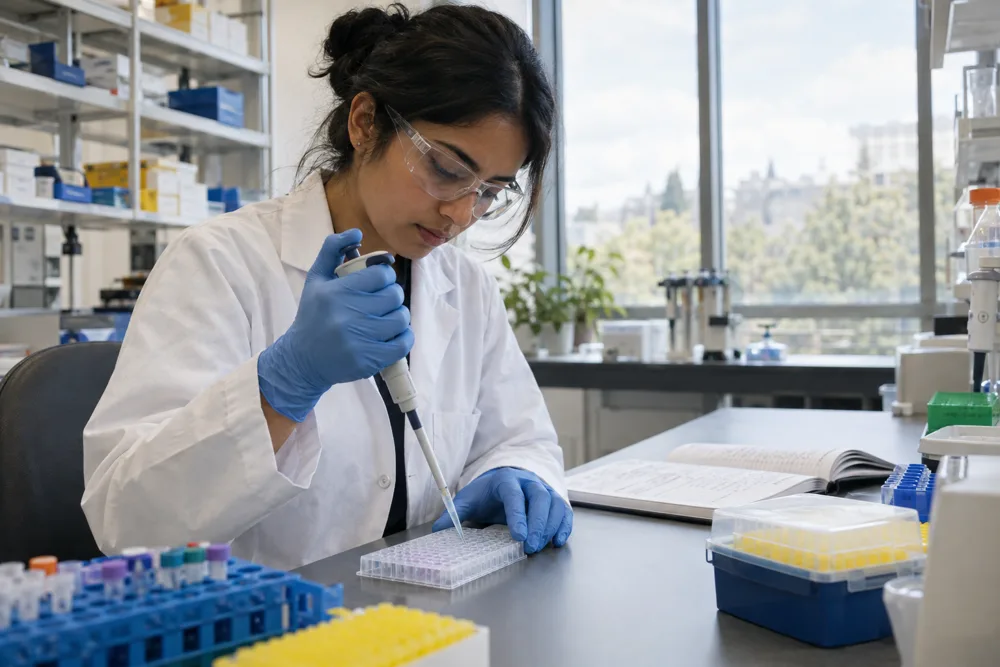
The questionCan a research result be traced to the data and the compute path that produced it?
The record would capture
- The datasets and their versions at the time of the run.
- The processing steps and parameters applied in order.
- The execution environment and its recorded tolerance.
Trace the provenance of a research workflow.
Stated limit: No clinical claim is made or implied. Provenance describes how a result was produced, not whether it is clinically valid.
Keep the source beside the statement.

A chronology, issue list or draft can look complete while leaving its basis difficult to examine. The proposed legal workflow keeps originals, source passages, document versions and reviewer decisions connected, so counsel can inspect the path rather than reconstruct it later.
- 01 / Source
Find the basis.
Trace a statement to a specific document, version and passage. Keep extraction uncertainty visible.
- 02 / Review
Expose the question.
Compare conflicting or incomplete support. Distinguish a source discrepancy from a difference in interpretation.
- 03 / Record
Retain the decision.
Keep counsel’s correction and its basis alongside the original draft, without erasing the earlier wording.
The questionCan another authorized reviewer follow the same source-to-statement path?
The record would capture
- Originals, document versions, passage locators and access permissions.
- Transformation context, source-linked drafts and unresolved questions.
- Reviewer corrections, their stated basis and the retained version history.
Test traceability on one bounded corpus, including known inconsistencies, missing support and false flags. Agree the acceptance criteria before the scored run.
Stated limit: Lineage supports review. It is not a guarantee of admissibility, privilege protection or legal correctness. Final legal decisions stay with counsel.
What changed between the two runs?
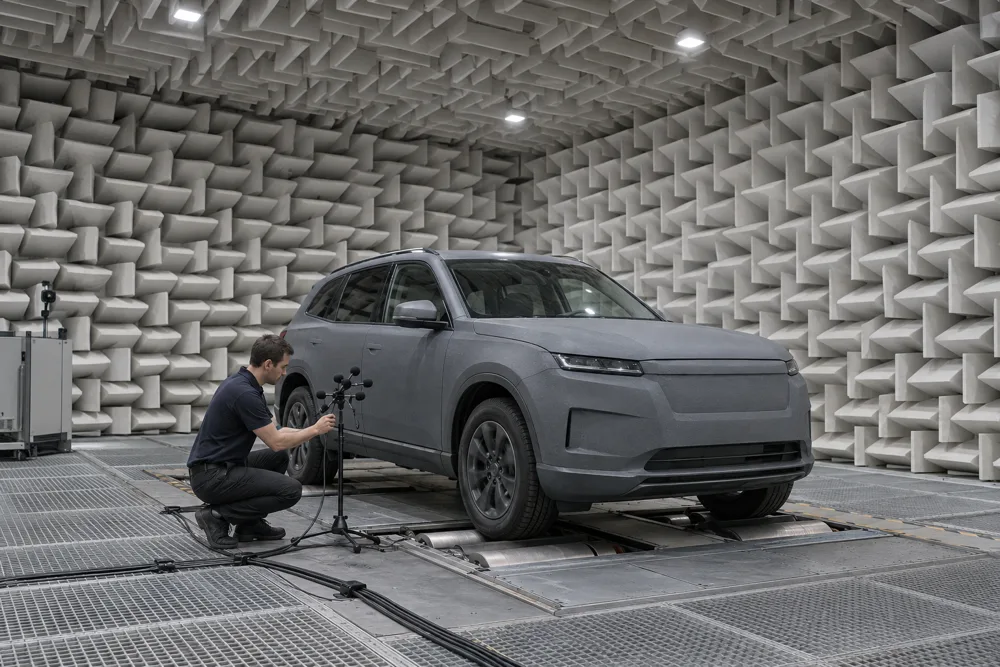
The questionCan a changed sound be investigated with its test conditions in view, without test data leaving the perimeter?
The record would capture
- Test configuration, operating point, sensor identity and placement.
- Acquisition settings, calibration reference and environmental observations.
- Input versions, processing parameters and the order of analysis.
Preserve test conditions alongside signal analysis.
Stated limit: A repeatable digital analysis and a repeatable physical measurement are different questions. The record does not validate a measurement or prove that a signal is authentic.
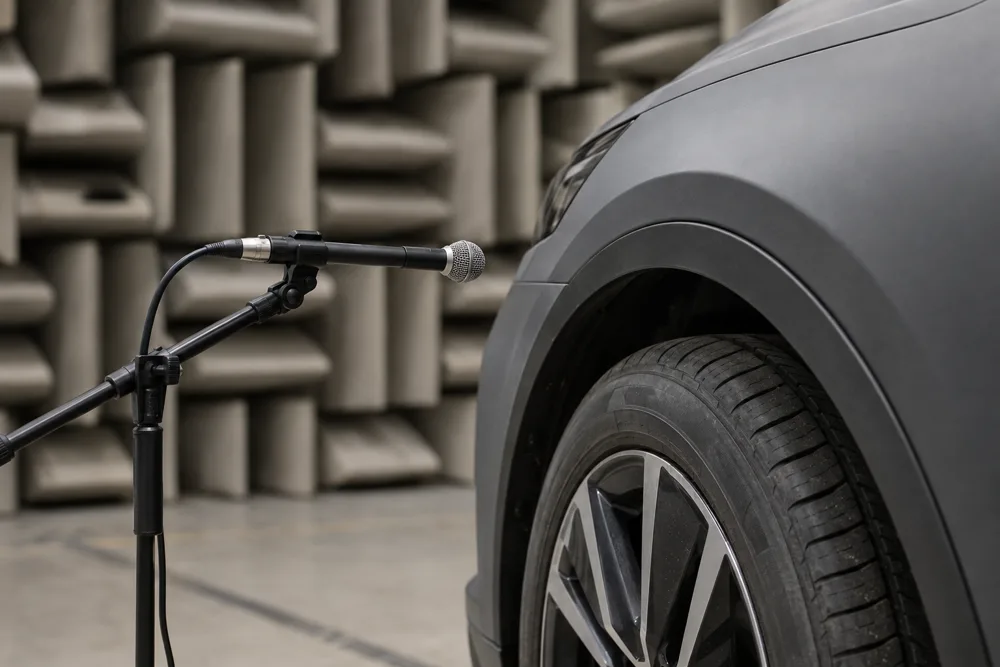
A signal tells you what was recorded. The test conditions and the processing history help explain what it means.
A world has a history.

The questionCan authoritative simulation state be reconstructed when a result is challenged?
The record would capture
- Authoritative state at recorded checkpoints, with the ordered events between them.
- Build, configuration and random-seed identifiers.
- The causal parents of each event, so the first divergence can be found.
Reconstruct authoritative simulation state and evaluate continuity.
Stated limit: State hashes help identify differences. They do not prove that an original input was legitimate, replace anti-cheat or establish support for any game engine.
From incident to first cause
- Start from the contested event.
- Load the nearest recorded checkpoint.
- Replay the bounded event chain.
- Stop at the first anchor mismatch.
- Trace its causal parents and the state it affected.
A proposed interface
A world-state delta interface would send compact changes from authoritative simulation to the client in place of a complete world snapshot. It is a concept. No shipped interface or performance result is claimed.
Proposed design-partner scope
Small enough to isolate. Specific enough to measure.
The proposed first experiment is one server-authoritative arena. It uses scripted players, a fixed tick rate, a versioned ruleset and recorded sessions. Controlled faults are injected to test whether review finds them. The simulation history is the subject, not visual fidelity or rendering performance.
- Pin the build, inputs, policy and supported environment.
- Capture authoritative checkpoints and event deltas.
- Replay the same bounded sequence and compare checkpoints.
- Inject controlled faults and require an explicit mismatch, never a silent pass.
Acceptance gates are agreed before building. This is a proposed scope for discussion with a design partner.
Persistent characters, or a second compute backend, are considered only after the core gates pass. Neither is inferred from the first result.
Every image has a derivation.
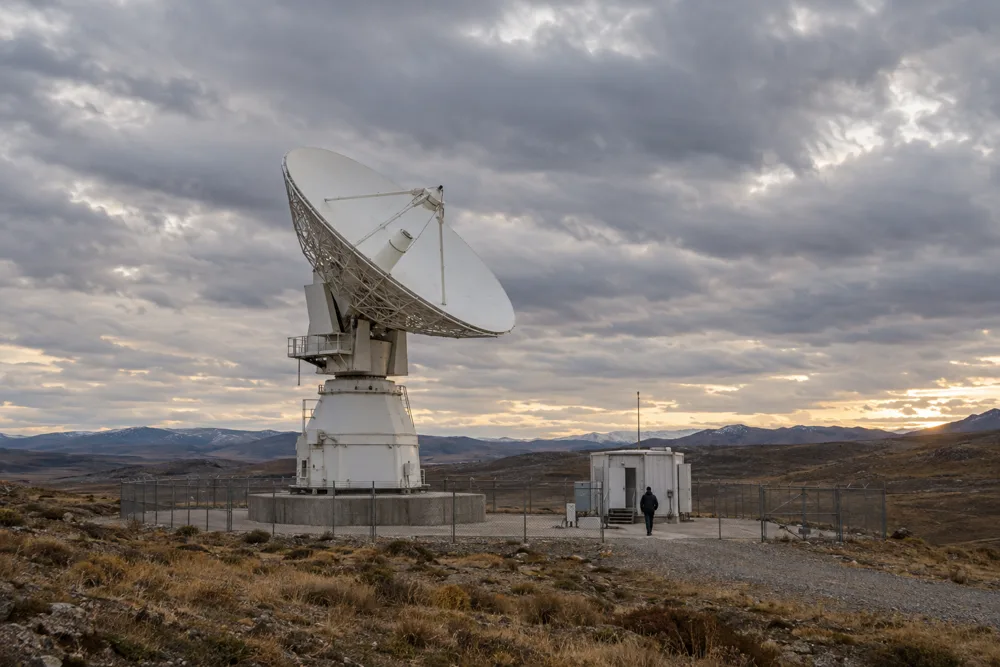
The questionCan a derived image or forecast be traced to the captures, inputs and run that produced it?
The record would capture
- Acquisition time, source identifiers, coordinate reference and quality flags for each scene.
- Transformations, model versions, comparison criteria and uncertainty notes.
- For simulation, the initial conditions, parameter versions and run identifiers.
Trace a derived image or forecast to its captures, inputs and run.
Stated limit: Reproducing a run does not show that it forecasts the weather accurately. A highlighted area in an image is an interpretation that still needs review.
Start with the question you cannot yet answer.
Tell us which chapter is closest. We will scope the evaluation around it.
Request a private briefing