Deterministic compute and data architecture
Prove
Everything.
Deterministic compute and data architecture for sovereign and regulated workloads. Developing the foundations for persistent context, coordinated execution, and evidence you can examine.
Illustrative film. Architecture, in its own frame.
The question
Anchor
How do you know?
A regulator, an auditor, opposing counsel, a board. Eventually someone asks how an AI system reached a decision: on which hardware, under which policy, using which data.
Most infrastructure can show logs. CertainTIQ is built so the answer is a record that can be examined.

Three things a reviewer will ask
Can you reconstruct the decision?
Not a log of the outcome. The inputs, policy, assignment and lineage that produced it.
Can you prove the boundary held?
Not controls applied afterwards. Governance evaluated before the work is permitted to run.
Can an independent reviewer verify it?
Not from live production. From a record checked against its recorded anchors.
Why the record matters
The record has to exist before the challenge does.
When an AI action is challenged, the evidence that matters is the context in which it was permitted and run: inputs, rule version, hardware assignment and history. CertainTIQ is designed to preserve that context at execution, rather than ask a reviewer to reconstruct it afterwards from scattered logs.
See what is retained →The difference
Anchor
An answer is not evidence.
Conventional infrastructure typically returns a result. CertainTIQ is designed to return the result with the recorded decisions needed to reconstruct it.
| Aspect | Conventional AI stack | CertainTIQ design |
|---|---|---|
| Governance | Often reviewed after execution, from logs. | Policy is checked and an audit record is emitted before dispatch. |
| Scheduling | Heuristics can be spread across external orchestrators. | A fixed evaluation order and a fixed tie-break inside one in-process boundary. |
| History | Logs can fragment across systems, drift or be overwritten. | A lineage graph in which each state links to its causes and carries a SHA-256 anchor. |
| Hardware | Integration is often written per vendor and per interconnect. | A common runtime interface intended to hide supported device and transport differences. |
| Scale | State can fragment as clusters grow. | Designed to scale horizontally on off-the-shelf hardware while maintaining state. |
This comparison describes design approaches, not any specific product.
The shared foundation
Anchor
One substrate between the work you run and the hardware you own.
CertainTIQ is designed as an ecosystem rather than another tool to integrate. Existing workloads come in, governed execution happens across the devices you already have, and evidence comes out for the people who must answer for the result.
Your work
- Data pipelines
- Signal and simulation code
- Databases and queries
- Models and agents
CertainTIQ substrate
Govern · route · record · replay
Your hardware
- CPUs
- GPUs
- FPGAs
- AI accelerators
Evidence
Lineage and replay records for boards, auditors, regulators and engineering teams.

Runs on what you own
Built for off-the-shelf hardware and independent of any single interconnect, so adoption starts with the fleet already in place.
Brings existing work with it
Designed to bring current pipelines, scripts and databases under one governance model, with integration scoped in each evaluation.
One set of rules everywhere
The same policy model applies on every device and every tenant, rather than being rebuilt per system.
Evidence by default
Every governed task leaves a record that can be replayed and compared, instead of a log written after the fact.
The record
Anchor
Every governed task leaves a sealed trace.
Hashes give a reference for comparison. They do not by themselves prove that inputs were true.
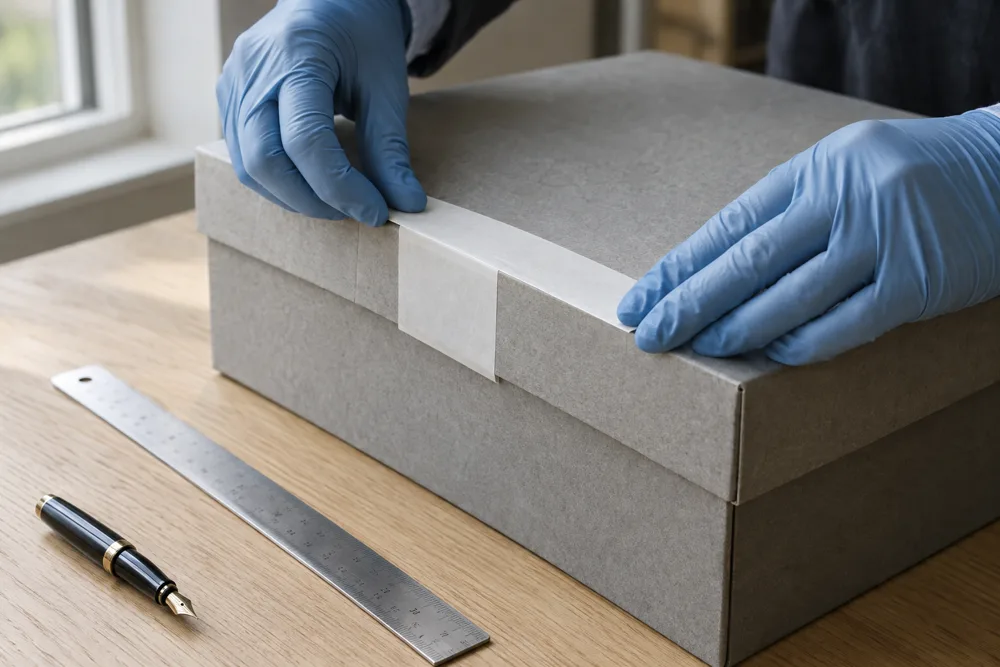
Each step becomes a node. Each node links to its causes and carries a SHA-256 anchor. Alter one record and its anchor no longer matches.
Where proof is required
Anchor
Seven places an answer is not enough.
Outcomes describe what an evaluation would examine, not results achieved.
See every application-
01
Sovereign and government
Examine execution within agreed data and operational boundaries.

-
02
Finance
Reconstruct a selected analytical workflow and its inputs.

-
03
Healthcare and life sciences
Trace the provenance of a research workflow.

- 04 Legal and discovery Examine the transformation history behind a result. Stated limitLineage supports review. It is not a guarantee of admissibility.
-
05
Industrial and NVH acoustics
Preserve test conditions alongside signal analysis.

-
06
Interactive worlds
Reconstruct authoritative simulation state and evaluate continuity.

-
07
Earth observation and weather
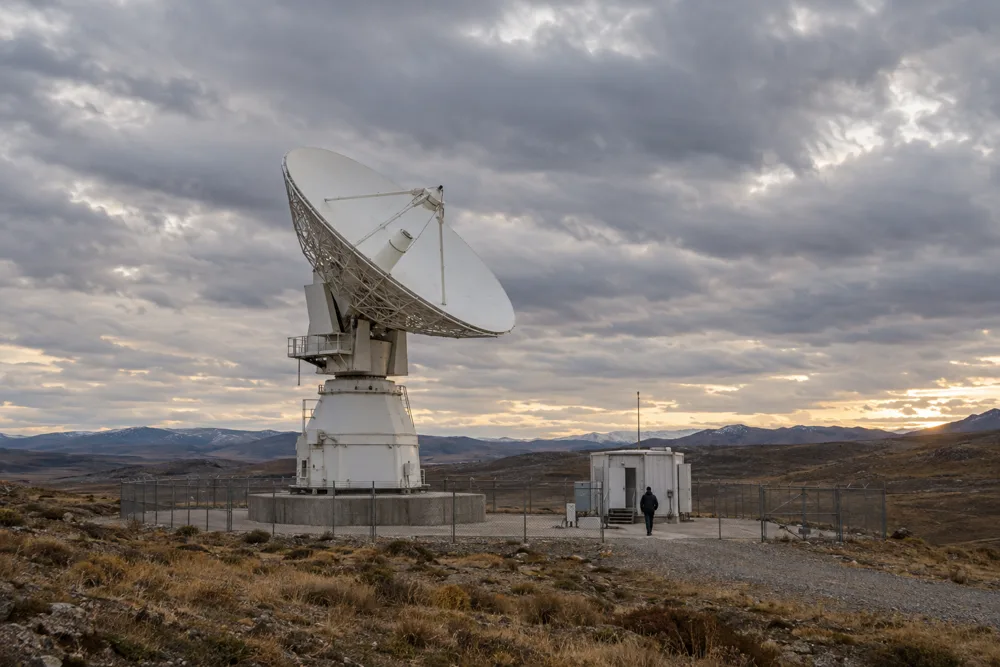
Trace a derived image or forecast to its captures, inputs and run.
Proposed evaluation
Anchor
A thirty-day evaluation on one program and one supported rig.
A proposed structure that begins once technical readiness is confirmed. Data custody, retention, NDA terms and access are agreed in writing before day one.
§07 · Architecture dossier Anchor
The CertainTIQ architecture is supported by an active intellectual-property program. Explore the incorporated filing scope and the questions for private diligence.
Private briefing, under mutual NDA
Anchor
Bring the workload you cannot yet prove.
A session with the CertainTIQ engineering team. We walk through the architecture, test it against your questions and scope whether an evaluation makes sense.
Request a private briefingOr write to Info@certaintiq.com.